Free on-site assessment
One of our arborists visits your property to check the tree, its surroundings, and the safest way to bring it down.
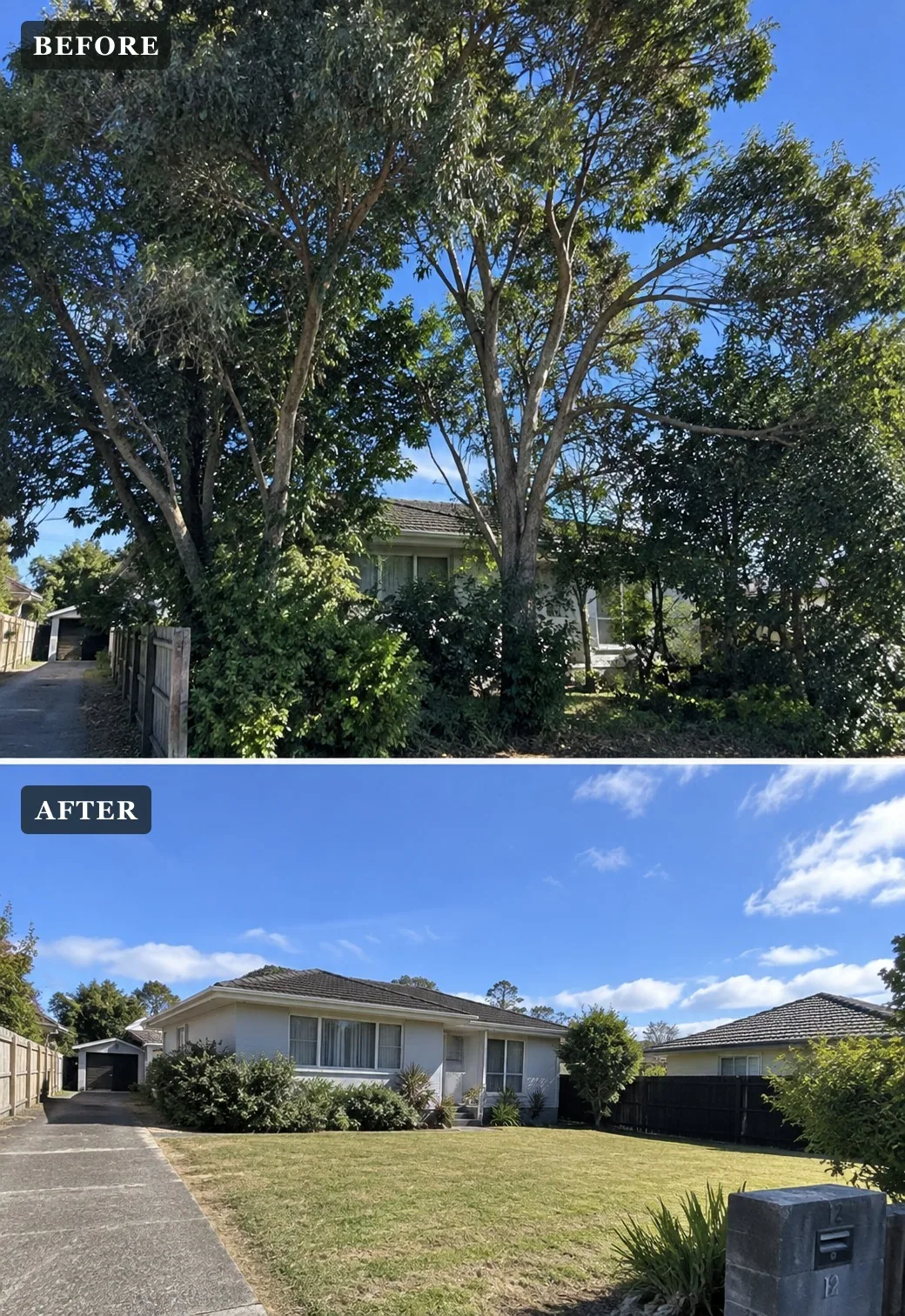
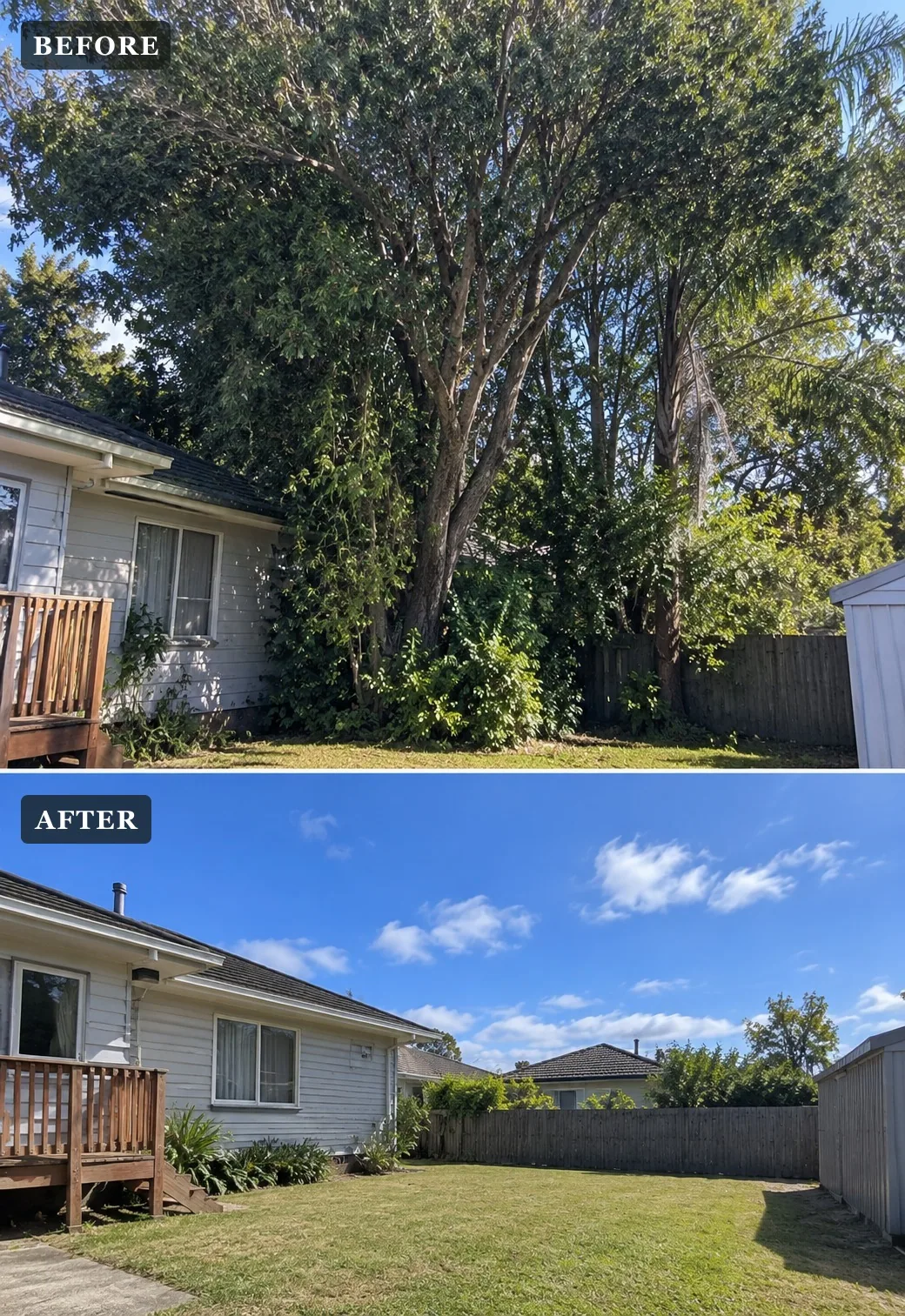
Every tree removal job follows the same careful process, whether it’s a small backyard tree or a large removal near power lines.
One of our arborists visits your property to check the tree, its surroundings, and the safest way to bring it down.
We use the right ropes, rigging, and cutting techniques to remove the tree in sections, protecting your property.
Branches are chipped on-site and the area is cleared of debris, leaving your section tidy.
We do a final walk-through with you to confirm the job is complete and everything is safe.
Not sure if a tree needs to come down? Here are some of the most common signs our arborists look for.
A tree that has started leaning, especially after wind or rain, may have compromised roots.
Large dead branches, missing bark, or fungus growing at the base can signal a dying tree.
Roots lifting paths, cracking foundations, or blocking drains are a sign the tree needs to go.
Split trunks, broken limbs, or disease that has spread through the canopy usually can’t be reversed.
The requirements for tree removal in West Auckland may vary depending on the location of the tree and the specific regulations set by the local council. However, some of the general requirements for tree removal in New Zealand include:
A permit is often required to remove a tree in New Zealand. To obtain a permit, you must apply to the local council and provide information about the tree, including its species, size, location, and reason for removal.
Before removing a tree, you must take measures to protect surrounding properties, such as installing barriers or covering windows.
You must comply with all Council rules and regulations regarding tree removal, such as following proper safety procedures and using appropriate equipment.
An assessment of the tree may be required to determine if it is dead, dangerous, or poses a risk to the public. The assessment should be performed by a qualified arborist.
In some cases, you may be required to replant a new tree to replace the one that was removed.
Tree removal should be performed in a manner that protects the surrounding environment and wildlife.